Euro 6 aftertreatment combines several controlled subsystems, so a warning lamp does not identify a failed part by itself. For fleet managers and parts distributors, the practical risk is replacing a dosing pump, sensor, or catalyst before the complete system has been checked.
This guide covers the full Euro 5/6 SCR aftertreatment system — how it works, which components fail and why, how to read the fault codes, and what to verify when sourcing OEM-compatible replacements.
How Euro 5/6 SCR Aftertreatment Systems Work
Selective Catalytic Reduction (SCR) is a core technology behind Euro 5 and Euro 6 NOx control. The system injects a urea solution — sold commercially as AdBlue or DEF (Diesel Exhaust Fluid) — upstream of the SCR catalyst. ISO 22241-1 defines the quality characteristics of AUS 32 used by automotive SCR systems.
The basic chemical reaction:
4 NO + 4 NH₃ + O₂ → 4 N₂ + 6 H₂O
Ammonia (NH₃) is produced by the thermal decomposition of urea. The SCR catalyst — typically a vanadium or zeolite-coated substrate — facilitates the reaction at temperatures between 200°C and 600°C.
Euro 5 vs Euro 6 — what changed:
| Standard | NOx limit (g/kWh) | Key addition |
|---|---|---|
| Euro 5 | 2.0 | SCR required on most platforms |
| Euro 6 | 0.4 | Tighter NOx limit, closed-loop NOx control via dual NOx sensors, OBD-II monitoring |
The limits above summarize the heavy-duty steady-state values published by UNECE for Regulation No. 49; the applicable test cycle and approval series still need to be checked for a specific engine.
Euro 6 introduces a second NOx sensor downstream of the SCR catalyst. The ECU continuously compares upstream and downstream NOx readings to verify SCR conversion efficiency. If efficiency drops below threshold — regardless of the root cause — it triggers fault codes and, eventually, engine derate.
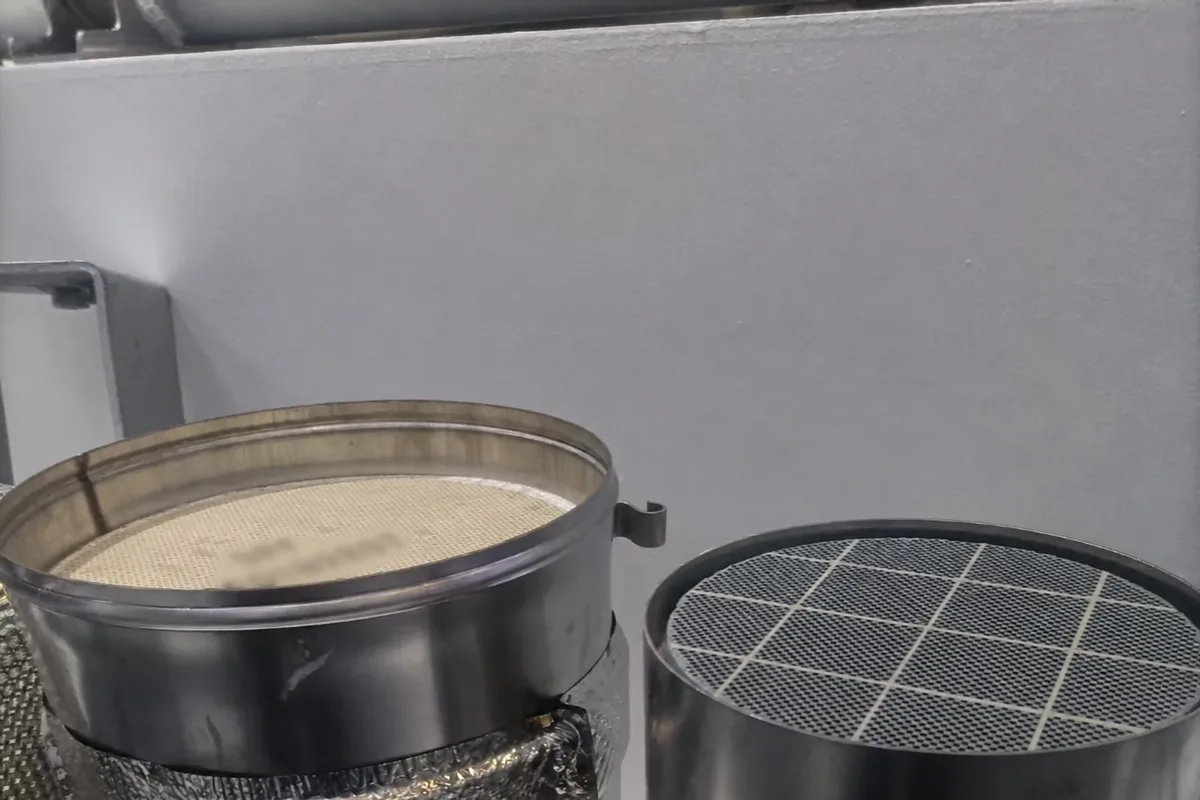
On most Euro 6 platforms, the full aftertreatment architecture also includes a Diesel Oxidation Catalyst (DOC) and Diesel Particulate Filter (DPF) upstream of the SCR catalyst, forming a DOC–DPF–SCR stack. Each stage has its own failure modes and diagnostic signatures.
Key Components and Common Failure Modes
SCR Catalyst
The SCR catalyst is the chemical core of the system. It degrades gradually under normal operation and can fail prematurely from:
- Urea contamination — incorrect concentration (not 32.5%), low-quality AdBlue, or water ingress. Deposits form on the catalyst surface and reduce active surface area.
- Thermal damage — sustained temperatures above 650°C, typically caused by DPF regeneration events routed through the catalyst or turbo bypass faults.
- Sulphur poisoning — fuel with high sulphur content (a risk in some Asian and African markets) deactivates the catalyst surface over time.
Catalyst degradation can present as sustained low SCR efficiency after dosing, sensing, exhaust leakage, and engine-out emissions have been checked with the applicable OEM procedure.
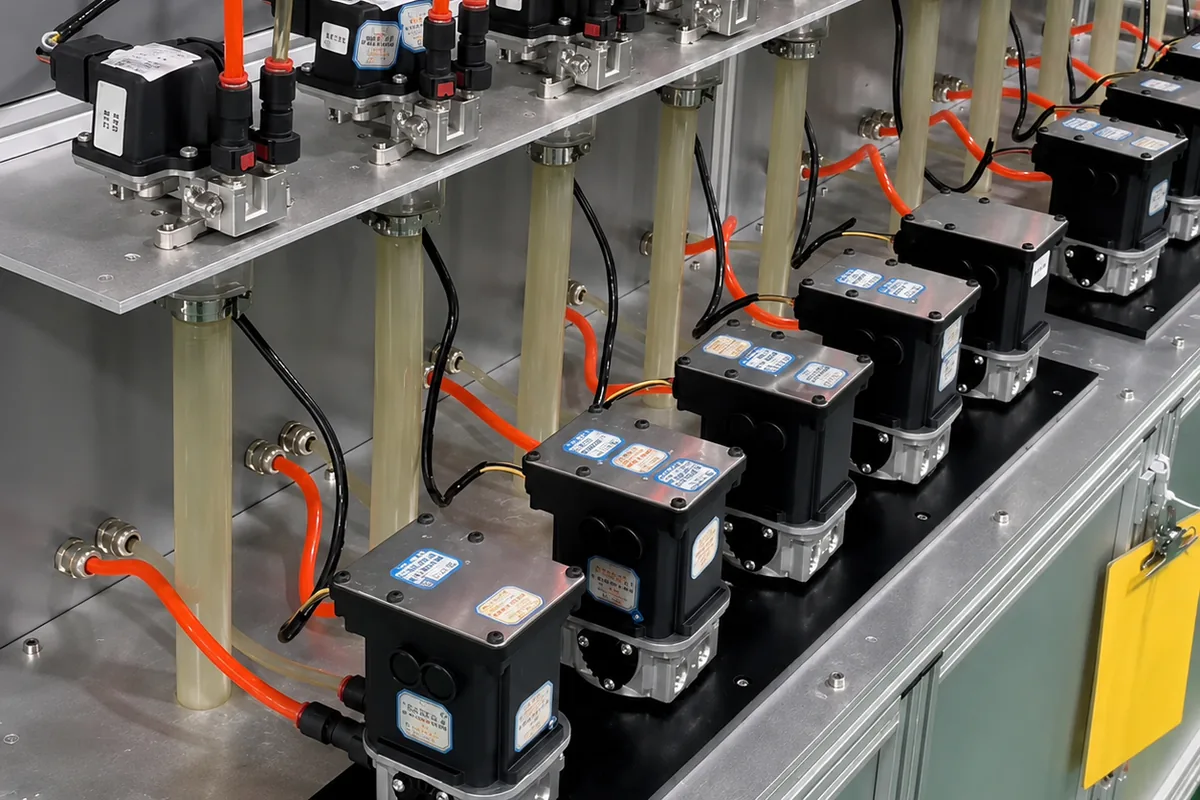
Urea Dosing Pump
The dosing pump pressurises the AdBlue circuit and delivers measured doses to the injector. It is often investigated when the reductant system reports a pressure or delivery problem, but related wiring, fluid, filter, sensor, and line faults can produce similar symptoms.
Common failure causes:
- Pump wear or an internal restriction — measured pressure or flow falls outside the vehicle manufacturer's test specification.
- Crystallised urea deposits — from using contaminated AdBlue or leaving the system inactive in high-temperature environments. Deposits block the pump filter and strainer.
- Electrical or motor failure — wiring harness corrosion, connector damage, voltage supply faults, or an internal motor fault can interrupt pump operation.
- Frozen AdBlue — in cold climates, a failed heating element prevents thaw, causing dry-run cavitation damage.
For a detailed diagnostic procedure and OE cross-reference, see Euro 6 Heavy Truck Urea Pump: Common Faults and Selection Guide.
AdBlue Injector
The injector atomises AdBlue into the exhaust stream. It is mounted directly in the exhaust pipe and exposed to high heat and vibration. Failure modes:
- Clogging — dried urea crystals block the nozzle and reduce the actual dosing rate even when pump operation is within specification.
- Leak-by — the injector fails to seal fully, allowing exhaust gases to backflow into the AdBlue line. Symptom: discolouration or crystalline deposits at the injector port, elevated return-line pressure.
- Electrical fault — injector coil failure or connector corrosion. Symptom: no injector pulse on actuation test.
Injectors are OE-specific — atomisation geometry and flow rate are matched to the pump and ECU calibration. Generic substitutes frequently cause dosing inaccuracy.
NOx Sensors
Euro 6 uses two NOx sensors: upstream (pre-SCR) and downstream (post-SCR). Both communicate over CAN. Failure signatures:
- Sensor heater fault — the NOx sensor element requires a heating cycle before it reports valid readings. Heater failures cause the ECU to default to worst-case dosing assumptions.
- Slow response / drift — the sensor still reports values but with degraded accuracy. The ECU detects this as low SCR efficiency even with a functional catalyst.
- Connector corrosion — a frequent failure point on trucks operating in high-humidity or coastal environments.
NOx sensor replacement requires a sensor adaptation reset in the ECU on most platforms.
DOC (Diesel Oxidation Catalyst)
The DOC oxidises carbon monoxide and unburned hydrocarbons, and raises exhaust temperature to assist DPF regeneration. It rarely fails independently but can be damaged by:
- Oil contamination — from turbo seal failure or blow-by. Oil coats the catalyst surface and causes a sustained light-off temperature increase.
- Fuel contamination — from fuel injector leakage.
DPF (Diesel Particulate Filter)
The DPF traps soot particles. It regenerates passively (high-load driving) and actively (forced post-injection to raise exhaust temperature). Common failure modes:
- Blocked filter — insufficient passive regeneration due to short-haul / city driving cycles. Active regeneration is unable to recover a severely loaded filter.
- Melted substrate — uncontrolled regeneration event, typically caused by fuel injector over-fuelling during forced regen. A melted DPF cannot be cleaned — replacement is required.
- Cracked substrate — from thermal shock (cold water on hot filter during wash, or rapid temperature cycling).
Fault Code Handling Checklist
Generic fault-code lists can misidentify the affected sensor position, circuit, or aftertreatment component because code definitions and diagnostic trees vary by ECU, engine family, and software version. Before ordering a part:
- record every active, pending, and stored code exactly as displayed by the OEM-capable diagnostic tool;
- save the complete OEM code description, freeze-frame data, lamp status, and operating conditions;
- identify the vehicle, engine, emissions calibration, ECU software, and aftertreatment family;
- follow the manufacturer's test sequence for wiring, connectors, fluid quality, pressure, temperature, and sensor plausibility;
- confirm the failed component only after the measured result is outside the limit in the applicable service procedure.
Do not assign “upstream,” “downstream,” “bank,” or a replacement part from a generic internet code description. The same warning symptom can be produced by dosing, sensing, wiring, contamination, exhaust leakage, engine-out emissions, or catalyst conditions.
Sourcing OEM-Compatible Replacements: What to Verify
1. OE number accuracy
Aftertreatment components are calibrated to specific ECU software versions and dosing strategies. A pump or injector from a different platform sub-variant — even if physically interchangeable — can cause dosing error codes or reduced conversion efficiency without generating a clear root-cause fault.
Verify the OE number against the chassis VIN, not just the truck model. On many Euro 6 platforms, mid-production software updates changed the specified component OE number for the same physical installation.
2. Cross-reference quality
Third-party cross-reference databases are frequently incomplete or out of date for Euro 6 components, which have shorter revision cycles than earlier generations. Request the supplier's OE cross-reference documentation — specifically which chassis VIN range and ECU software version the cross-reference applies to.
3. Pump pressure and flow specification
Dosing pumps have defined output pressure and flow specifications matched to the SCR control strategy. A pump with different characteristics can under-dose or over-dose even when its connector and mounting interface appear compatible. Confirm the pressure, flow, electrical, and control specification against the exact platform requirement.
4. Documentation to request
Before placing a bulk order for aftertreatment components, request:
- OE cross-reference list with VIN range
- Pressure and flow test report (for dosing pumps)
- Shelf-life and storage requirements (AdBlue-wetted components degrade if stored dry)
- Country-of-origin and HS code for import compliance
Guanda supplies OEM-compatible SCR aftertreatment components for Euro 5 and Euro 6 heavy trucks, including urea dosing pumps, injectors, and NOx sensors. View aftertreatment products →
Further Reading
- Euro 6 Heavy Truck Urea Pump: Common Faults and Selection Guide — step-by-step diagnostic procedure, OE cross-reference table, and selection criteria for dosing pump replacement